SOMA Breath vs Wim Hof: An Honest Comparison
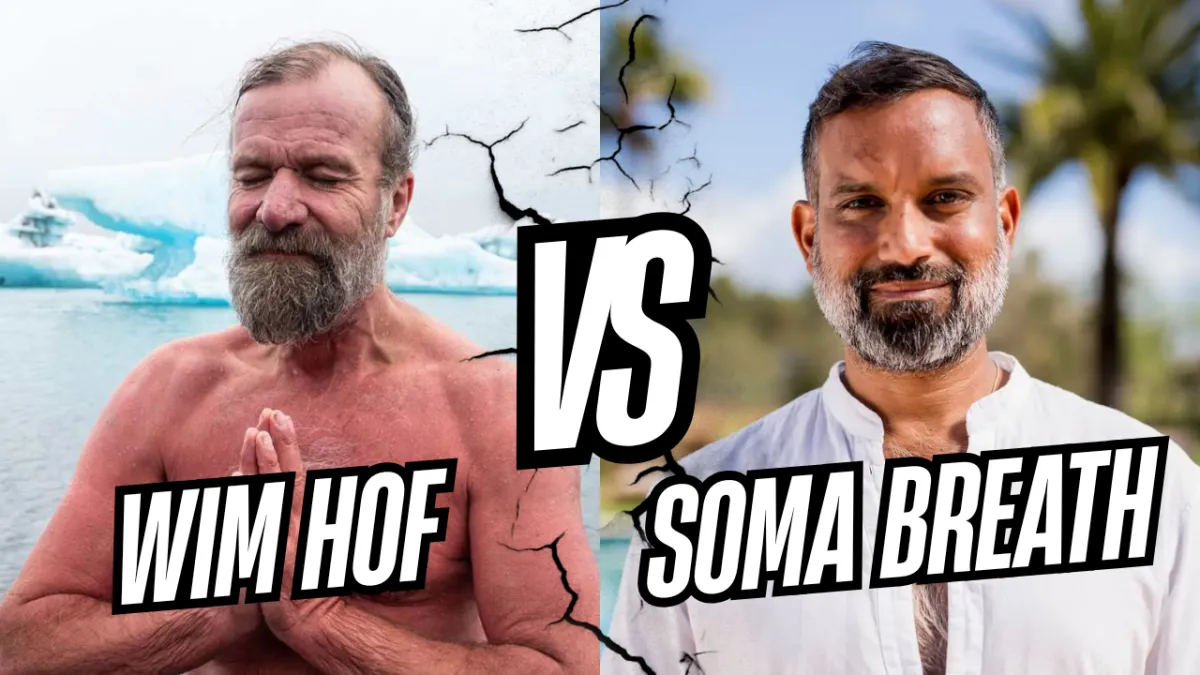
SOMA Breath and the Wim Hof Method both use rounds of deeper breathing followed by breath holds, but they feel very different. Wim Hof pairs fast, full breathing with cold exposure and commitment training. SOMA Breath sets rhythmic breathing to music and adds pranayama, breath holds, visualization and meditation. Choose by what your body enjoys and will keep doing.
I am a certified SOMA Breath coach, and I have not trained in the Wim Hof Method. So I will tell you what I know from the inside about one, describe the other from its own published practice, and leave the knocking out. Both have helped a lot of people. The better question is which one fits you.
What is the difference between SOMA Breath and Wim Hof?
The biggest difference is the experience. The Wim Hof Method is a vigorous breathing technique built around resilience, with cold exposure as a core pillar. SOMA Breath is a rhythmic, music-led breathing practice that blends ancient pranayama techniques with meditation. One tends to feel like training. The other tends to feel like a guided journey.
Here are the two methods side by side:
Wim Hof Method | SOMA Breath | |
|---|---|---|
Created by | Wim Hof, the Dutch "Iceman" | Niraj Naik, a former pharmacist turned breathwork teacher |
Core idea | Three pillars: breathing, cold exposure, commitment | Rhythmic breathing, pranayama, breath holds and meditation together |
Breathing pattern | 30 to 40 full, deep breaths per round, then an exhale hold | Rhythmic breathing in time with music, then breath holds |
Breath hold | After the exhale, as long as comfortable, then a 15-second recovery hold | Holds built into the rhythm, often guided with music and visualization |
Music | Optional | Central to the practice |
Cold | Cold showers, cold water and ice baths are a pillar | Not part of the method |
Mindset focus | Commitment, focus, mental toughness | Meditation, visualization, inner experience |
What it tends to feel like | Energizing, intense, physical | Immersive, emotional, meditative |
Typical setting | Solo with an app or video, or with a certified instructor | Guided sessions, often in groups or with a facilitator |
What is the Wim Hof Method?
The Wim Hof Method is a practice developed by Wim Hof that combines a specific breathing exercise, gradual cold exposure and commitment, meaning focus and mindset training. It became a global wellness trend through Hof's cold feats and brought breathwork into mainstream consciousness for millions of people.
The Wim Hof breathing technique works in rounds:
Breathe in fully, let go. Take 30 to 40 deep breaths, in through the nose or mouth and out without force.
Exhale and hold. After the last breath, let the air out and hold your breath until you feel the urge to breathe.
Recovery breath. Inhale fully and hold for about 15 seconds, then release.
Repeat. Most people do three or four rounds.
Cold therapy is the second pillar. People often start with 30 seconds of cold at the end of a shower and build toward cold water immersion or ice baths. Commitment, the third pillar, uses meditation and concentration to train focus.
The Wim Hof Method's own guidance is clear on one point: never practice the breathing in water or while driving, because the breath holds can cause lightheadedness or fainting.
What is the SOMA breathing technique?
The SOMA breathing technique, known as SOMA Breath, is a breathwork method created by Niraj Naik that combines rhythmic breathing set to music with ancient pranayama techniques, intermittent breath holds, visualization and meditation. Sessions are usually guided, and the music carries you through the rhythm.
A typical SOMA Breath session moves through:
Rhythmic breathing to a beat. The music sets the pace, so you are not counting in your head.
Pranayama. Classic yogic breathing techniques, adapted for modern practice.
Breath holds. Short and longer retentions woven into the rhythm.
Sound and toning. Humming and vocal toning on the exhale.
Visualization and meditation. Guided imagery and stillness, often at the end of a hold.
SOMA Breath offers different routines for different needs, from short daily practices to longer guided journeys, and certified instructor trainings at several levels.
How did I find SOMA Breath?
I found SOMA Breath by accident. I was searching for reiki, trying to clear something I could feel but could not name. Instead I found an online SOMA breathwork journey. That one session connected me to my ancestors and cleared blocks I had carried for a long time.
Less than two weeks later, I was in Ibiza for my SOMA Breath training. At that training I led a live online breath session for hundreds of people, and I discovered ecstatic dance for the first time.
I tell you this so you know where I am standing. I came to breathwork through the music-led, meditative door, and it is the door I teach from. I practice retention-based breathwork myself, and I notice more clarity, more energy and more awareness afterward. I have never trained in Wim Hof, so I won't pretend to know what it feels like from the inside. What I do know is that people who loved one method and people who found another one too much both deserve a practice that fits.
What happens in your body during these breathing exercises?
During both methods, a stretch of deeper or faster breathing is followed by a breath hold. The deeper breathing blows off carbon dioxide, which is why many people feel tingling or lightheadedness. The breath hold then lets carbon dioxide build back up while oxygen dips for a short time. Both are designed to influence the autonomic nervous system.
What people commonly notice:
Tingling in the hands, face or lips during the breathing rounds
A feeling of space or stillness during the holds
Strong emotions, sometimes laughter, sometimes tears
Altered states, especially in longer guided sessions
More energy and mental clarity afterward
Scientific research on both methods is still early, and most studies are small. You will see big claims online about immune response, reduced inflammation, blood pressure and athletic performance. We don't make those claims, and you don't need them to decide. Notice how a practice feels in your own body, and let that guide you.
Which is better for beginners?
Neither method is better for everyone. If you love intensity, physical challenge and cold showers, the Wim Hof Method may suit you. If you want music, meditation and an inner journey, SOMA Breath may suit you more. If fast breathing has ever felt like too much, start slower than either.
That last group matters to me, because I meet a lot of you. Maybe you tried a fast, forceful breathing class once and left dizzy, anxious or overwhelmed. That doesn't mean breathwork isn't for you. It means the pace didn't match your body that day.
The conscious breathwork we teach at Energy of Creation starts gently: mostly nasal, slower breathing, with breath holds that are always optional. Many people find that once they feel safe at a slower pace, they enjoy deeper practices later. If that is you, read What Gentle Breathwork Feels Like, and for the full picture, What Is Conscious Breathwork?.
How do Oxygen Advantage and holotropic breathwork compare?
Oxygen Advantage and holotropic breathwork sit at opposite ends from each other. Oxygen Advantage, created by Patrick McKeown, focuses on functional breathing: light, slow, nasal breathing and gentle breath holds, often for sports performance and everyday breathing patterns. Holotropic breathwork, developed by Stanislav and Christina Grof, uses fast breathing and evocative music for long sessions.
A quick way to place them:
Oxygen Advantage: breathe less, through the nose, more efficiently. Popular for exercise performance and daily practice.
Holotropic breathwork: long, intense sessions, often two to three hours, aimed at altered states and self discovery, usually with trained facilitators.
Wim Hof: vigorous rounds plus cold.
SOMA Breath: rhythmic, music-led, meditative.
Every breathwork method is a tool. The right one is the one that leaves you feeling more like yourself.
Is Wim Hof breathing better before or after a workout?
The Wim Hof Method is usually practiced before a workout or first thing in the morning on an empty stomach, not straight after hard exercise. Never practice the breath holds while swimming, in cold water or during intense activity, because they can cause lightheadedness or fainting.
If you are training seriously, talk with your coach or a medical professional about how breathwork fits your program.
Are SOMA Breath and Wim Hof safe?
Both methods are practiced safely by many people, but both involve over breathing and breath holds, so precautions matter. Practice seated or lying down, never in water or while driving, and stop if you feel dizzy, panicky or unwell.
Please check with your doctor before trying either method, and skip breath holds and fast breathing, if you:
Are pregnant
Have a heart condition, high blood pressure or chest pain
Have epilepsy, a history of seizures or fainting
Have a lung condition or another serious health condition
Have had recent surgery
Our work is coaching, practice and community. It is not therapy or medical treatment, and breathwork is not a replacement for either. If you are going through a mental health crisis, please reach out to a licensed professional first.
Where can you practice breathwork with a community?
You can practice with us inside the Lab, our online community, where conscious breathwork becomes a rhythm instead of a one-off. Members get the Baseline Protocol, a 15-minute guided breathing audio, plus weekly calls and Super Sunday, our monthly live gathering of breath, sound and movement on the first Sunday of each month.
The community aspect is the part most people underestimate. One great session can feel amazing, and then life gets loud again. Coming back, week after week, with people who practice too, is what makes it stick. That rhythm is the heart of the Afterglow Method, the way Destinē and Victoria teach people to feel their lives again at Energy of Creation.
Here is how one person who joined one of our in-person breath sessions described it in a Google review:
"Didn't have a problem keeping up they let you go at your own pace and no judgment"
Richard H., Google review
Join the Lab and practice with us
Frequently asked questions
Is SOMA Breath good?
SOMA Breath is a well-structured breathwork method that many people enjoy for its music, rhythm and meditative feel. Whether it is good for you depends on your body, your health and what you want from a practice. Start with a guided session, go at your own pace, and notice how you feel afterward.
Does Wim Hof breathing lower cortisol?
Research on Wim Hof breathing and stress hormones like cortisol is limited and still developing, so we don't make that claim. Many people say they feel more energized and focused afterward. If you are interested in the science, look for peer-reviewed studies and talk with a medical professional.
Can you do SOMA Breath and Wim Hof together?
Some people practice both, using Wim Hof for energy and cold training and SOMA Breath for meditation. If you combine them, keep the total number of rounds and breath holds modest, never practice in water, and give your body time to recover between sessions.
Which breathwork method is the gentlest?
Slow, nasal practices are generally the gentlest, like diaphragmatic breathing, a longer exhale or coherent breathing. Compared with fast rounds and long holds, these are generally safer starting points for beginners and for anyone who found intense breathing overwhelming.
How often should you do breathwork?
A few minutes most days and a longer guided session each week or month is a strong rhythm for most people. Consistency matters more than intensity. For more detail, read How Often Should You Do Breathwork?
Destinē is the co-founder of Energy of Creation, a conscious breathwork coach certified in SOMA Breath, and a 500-hour yoga teacher trained in Rishikesh. They grew a corporate wellness program from one office to teams across multiple states before building Energy of Creation with their wife and co-founder, Victoria, in Central Texas. Destinē teaches the Afterglow Method: feel it from the body up, know it from the mind down, live in the afterglow.