

What Is Breath Retention in Conscious Breathwork — And What Does It Do to Your Body?
What Is Breath Retention in Conscious Breathwork — And What Does It Do to Your Body?
By Destinē The Leader | Energy of Creation
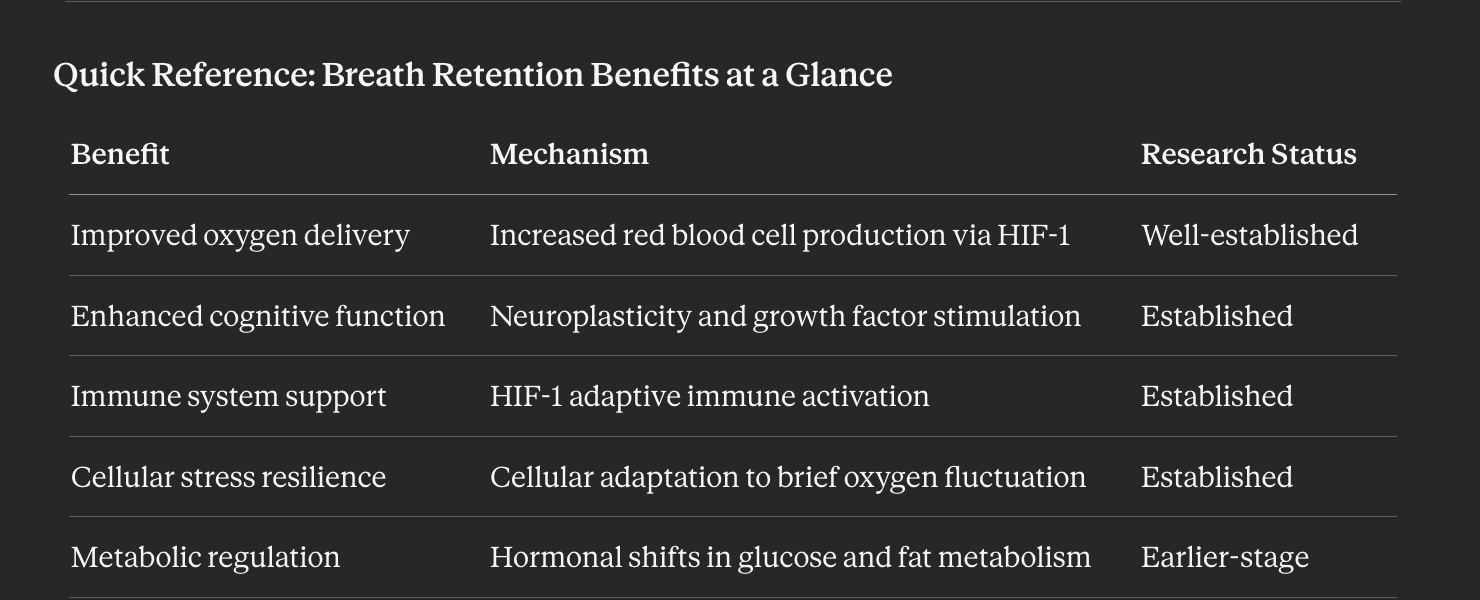
Breath retention — the practice of deliberately pausing the breath after an exhale — is one of the most scientifically significant components of conscious breathwork. During a breath hold, the body enters a brief state of reduced oxygen availability called intermittent hypoxia. This controlled physiological event activates measurable adaptations in the brain, blood, immune system, and nervous system. Research suggests benefits including improved oxygen delivery, enhanced cognitive function, immune activation, and cellular stress resilience — all from intentional pauses in the breathing cycle.
What Is Intermittent Hypoxia in Breathwork?
Intermittent hypoxia is a brief, controlled reduction in oxygen levels created by voluntarily holding the breath. In conscious breathwork sessions, this happens during the breath retention phase — the pause that follows a series of rhythmic inhales and exhales.
The term "hypoxia" refers to reduced oxygen availability. Brief intermittent hypoxia, as practiced in guided breathwork, is categorically different from oxygen deprivation. It is a deliberate, momentary signal the body receives and responds to with specific, adaptive changes.
The primary mechanism is the activation of hypoxia-inducible factor — a molecule abbreviated as HIF-1. When oxygen levels drop briefly, HIF-1 functions as a master regulatory switch, activating genes responsible for adaptation, resilience, and efficient oxygen use. This cascade of biological responses is what produces the downstream benefits studied in exercise physiology and breathwork research.
This is the same physiological response exploited by elite athletes through altitude training — except that conscious breathwork creates it through breath alone, with no altitude required.
The Science Behind Conscious Breathwork and Intermittent Hypoxia
Conscious breathwork combines ancient pranayama techniques with modern understanding of oxygenation, carbon dioxide balance, and autonomic nervous system regulation. The methodology Destinē is trained and certified in — SOMA Breath, developed by Niraj Naik — is one of the most structured applications of these principles, using rhythmic breathing, intentional breath retention, and music to create reliable physiological and neurological shifts within a guided session.
The science of intermittent hypoxia has been studied extensively in the context of athletic performance, neurological health, and cellular adaptation. Here is what the research indicates about each area of benefit.
What Are the Benefits of Breath Retention in Breathwork?
1. Does Breathwork Improve Athletic Performance?
Yes — through a specific mechanism. Intermittent hypoxia prompts the body to increase red blood cell production and optimize oxygen transport efficiency. The body, having briefly experienced lower oxygen availability, responds by becoming better at using the oxygen it has. This is why consistent breathwork practitioners commonly report improved endurance, sustained energy, and faster physical recovery — not from breathing more air, but from using air more efficiently.
2. Can Breathwork Improve Cognitive Function?
Research suggests that brief intermittent hypoxia may support neuroplasticity — the brain's capacity to form new connections and adapt. The controlled stress of a breath hold, followed by the return of full oxygenation, appears to stimulate neurological growth factors associated with cognitive performance, memory, and learning. The mental clarity reported after breathwork sessions has a measurable physiological basis: the brain has responded to a specific adaptive challenge.
3. How Does Breathwork Affect the Immune System?
HIF-1 activation through breath retention influences immune function by engaging the body's natural adaptive defense mechanisms. As with physical exercise, appropriate physiological challenge prompts the immune system to become more responsive and capable. Regular conscious breathwork practice appears to support the body's own resilience — not as a replacement for medical care, but as a meaningful input into overall immune health.
4. What Does Breath Retention Do at the Cellular Level?
At the cellular level, brief intermittent hypoxia trains cells to adapt more efficiently under stress conditions. The mechanism parallels what resistance training does for muscle tissue: the challenge creates adaptation, and the adaptation creates greater capacity. Cells trained to manage brief oxygen fluctuation demonstrate improved efficiency in handling other physiological stressors — a phenomenon researchers describe as cellular stress resilience.
5. Does Breathwork Affect Metabolism and Hormones?
Research has explored the relationship between intermittent hypoxia and metabolic regulation, including effects on hormones involved in glucose and fat metabolism. The evidence in this area is earlier-stage than the cardiovascular and neurological research, but directionally consistent with broader findings: brief, controlled oxygen reduction appears to support more efficient metabolic function. Individual results vary, and this is an area where the science continues to develop.
Why Nervous System Regulation Makes These Benefits More Accessible
The physiological benefits of breath retention are real on their own. But for the everyday high performer — someone running a chronically stressed, under-resourced nervous system — the most significant effect may be what consistent breathwork practice does to the baseline.
When the body learns to adapt efficiently to brief physiological challenges through regular breathwork, the threshold for what registers as threatening rises. Stress responses become more proportionate. Recovery becomes faster. Heart rate variability — a key biomarker of nervous system resilience — improves. The biological cost of navigating a demanding life decreases.
This is measurable adaptation, not metaphor.
At Energy of Creation, nervous system regulation is the foundation of everything we do — and breath retention is one of the most direct tools we have for building it. The REGULATE → RECLAIM → RISE framework that structures EOC's work begins with the body, because the body is where change is most durable and most fast.
Is Conscious Breathwork With Breath Retention Safe?
Breath retention practices are safe and well-tolerated for most healthy adults in a properly guided context. Standard precautions include:
Do not practice breath retention in water or any situation where brief lightheadedness could create physical risk
Do not practice while driving or operating machinery
Consult a healthcare provider before beginning if you are pregnant or have cardiovascular, respiratory, or neurological conditions
In every EOC session — online or in person — participants are guided throughout, held in a structure that prioritizes safety, and always free to return to natural breathing at any point. The breath retention phases are gentle and voluntary, never forced.
How to Experience the Benefits of Conscious Breathwork
Reading about the science of breath retention and feeling what a full conscious breathwork session does to your system are two categorically different experiences. The research provides orientation. The practice provides transformation.
Super Sunday — EOC's monthly online conscious breathwork gathering — includes the full breathwork arc: rhythmic breathing, breath retention, music, and the physiological and experiential effects described throughout this article. First Sunday of every month. One hour. $27 suggested contribution.
The Cortisol Reset — one of EOC's monthly 3-5 day challenges — is the most directly connected to the physiological benefits covered here. It's specifically designed to improve HRV, restore sleep architecture, and create measurable nervous system recalibration through daily breathwork practice. $497 per challenge, or included in BIG VISION.
The BIG VISION annual membership gives unlimited access to all monthly challenges, weekly group sessions, the full community, and the complete EOC framework for sustainable peak performance.
Explore the Monthly Challenges →
Quick Reference: Breath Retention Benefits at a Glance
Energy of Creation is a 508(c)(1)(a) nonprofit wellness community based in Temple/Belton, Central Texas. Our mission: Breaking Cycles, Building Futures.


