
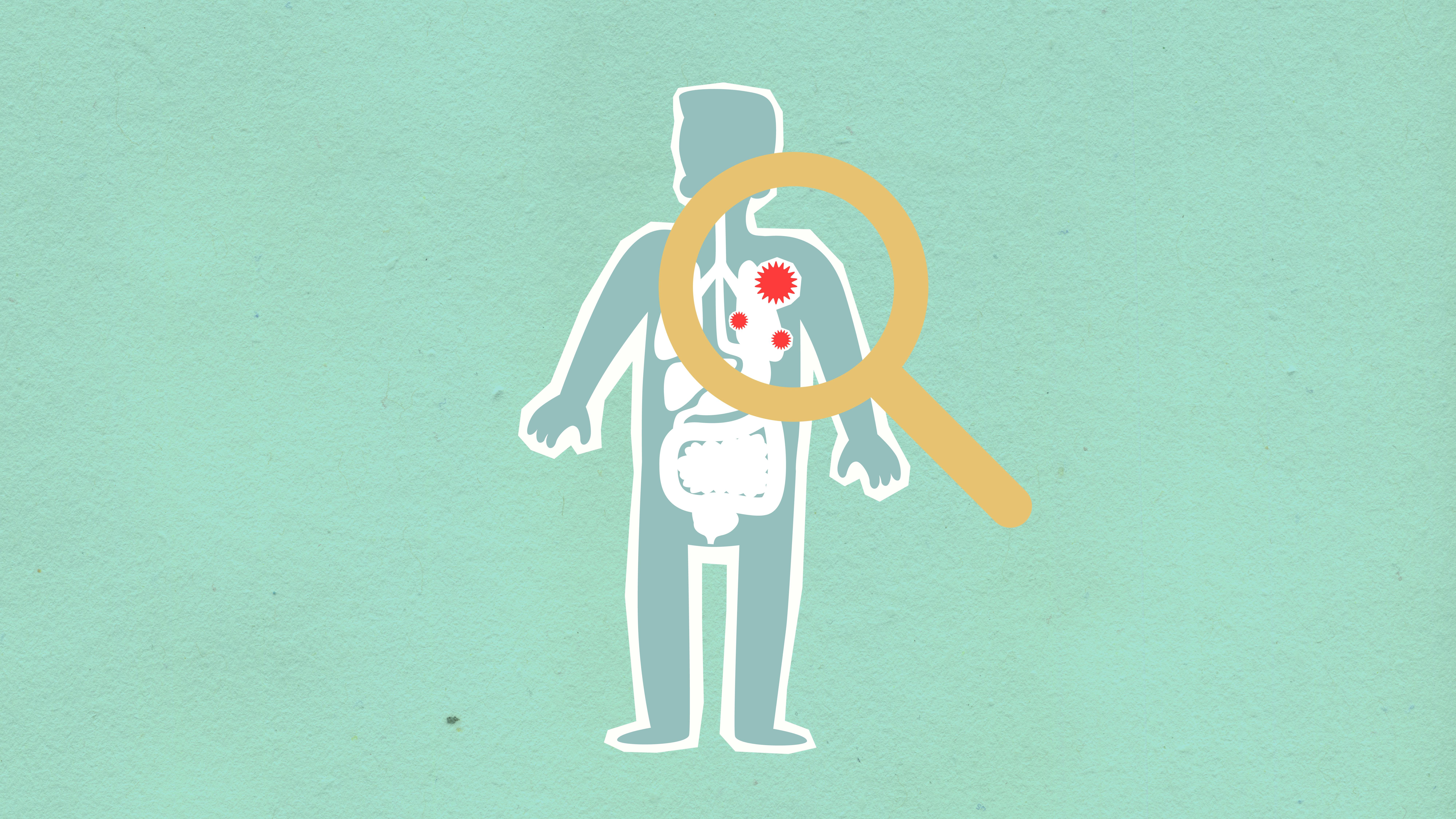
What is Allostatic Load? Signs, Symptoms, & How to Heal Your Nervous System
Your Body Is Trying to Tell You Something: Understanding Allostatic Load and Nervous System Regulation
Your body has been trying to get your attention for a while now.
Not dramatically. Not with a diagnosis or a crisis you couldn't ignore. Just persistently, in the background — with the same low-grade language it's been using for months, maybe years. The cold you catch every time your schedule gets packed. The week it takes to shake something that everyone else seemed to recover from in a day or two. The tiredness that is always present just below the surface, available the moment you stop moving. The headache on Thursday afternoons. The tension that lives in your shoulders like it pays rent.
You haven't ignored these things exactly. You've noticed them, adjusted around them, managed them — a supplement here, an early night there, a promise to yourself that next month will be less intense. And then next month arrives and the signals are still there, slightly louder, slightly more insistent.
Here's what those signals are not: random. Here's what they are not: bad luck. Here's what they are not: the inevitable cost of a full life.
They are your body's communication system doing exactly what it was designed to do — flagging a pattern that has been running below your conscious awareness for long enough that it now needs your attention.
What Is Allostatic Load? Why the Body Doesn't Malfunction, It Adapts
Allostatic load is the cumulative biological wear and tear on the body's regulatory systems caused by sustained, chronic stress and the continuous effort of physiological adaptation. Unlike acute stress, allostatic load accumulates invisibly, manifesting as chronic fatigue, frequent illness, and a depleted immune response.
Modern medicine is extraordinarily good at responding to acute crisis. Broken bones, acute infections, emergencies — the system was built for these, and it delivers.
Where it is less equipped is in the territory most people actually live in: the chronic, the subclinical, the persistent-but-not-yet-diagnosable. The space where the labs come back normal but the body does not feel normal. Where the symptoms aren't dramatic enough to warrant intervention but are consistent enough that you've started to wonder whether this is just who you are now.
This is the territory of allostatic load — a term coined by neuroscientist Bruce McEwen to describe the cumulative biological wear and tear on the body's regulatory systems from sustained stress, chronic activation, and the continuous effort of adapting to demands that exceed the body's recovery capacity.
Allostatic load accumulates invisibly. It doesn't announce itself. It shows up as the pattern — the frequency with which you catch what's going around, the length of time your recovery takes, the quality of energy available after a full night's sleep, the baseline level of inflammation that your immune system is quietly managing even on the days you feel fine.
Your body isn't malfunctioning. It is accurately reflecting a load it has been carrying — and asking, through the only language available to it, for something to change.
How Chronic Stress and Allostatic Load Impact Your Immune System
A 2026 study in Cell Metabolism offers a useful frame for understanding what chronic low-level unwellness and frequent illness are signaling at the cellular level.
Researchers at the Centro Nacional de Investigaciones Cardiovasculares in Spain found that immune cell readiness — specifically the capacity of dendritic cells to detect threats and activate a defense response — depends on the maintenance of electron flow through the mitochondrial respiratory chain. When that flow is disrupted by chronic stress, shallow breathing, or sustained cellular depletion, the immune sentinels dim. They don't go offline entirely. They just operate below their capacity — less responsive, less precise, slower to mobilize when a threat arrives.
This is what frequent illness looks like from the inside. Not a broken immune system. A dimmed one. An immune readiness checkpoint that is not being adequately maintained because the cellular conditions it depends on have been chronically compromised.
The pattern of catching everything, recovering slowly, never quite feeling resilient — that's the immune system reporting, faithfully and accurately, on the state of the system underneath it. The signal is not the problem. The signal is information.
The Wisdom of Interoception: Listening to Your Internal State
Your body's capacity to sense and communicate its own internal state is called interoception — and it is one of the most underappreciated faculties available to you for nervous system regulation.
Research by neuroscientist Sarah Garfinkel and her colleagues at the University of Sussex has demonstrated that interoceptive accuracy — how clearly a person can perceive their own internal body signals — is closely linked to emotional regulation, decision-making quality, resilience under stress, and overall wellbeing. People with higher interoceptive awareness tend to have more responsive immune systems, more regulated nervous systems, and a faster return to baseline after stress.
In other words: the ability to listen to your body is not a soft skill. It is a biological capacity with measurable health implications. And it is a capacity that atrophies under chronic stress and hyperproductive lifestyles — precisely because staying in motion, staying productive, and staying ahead of the to-do list requires tuning the body's signals out.
The persistent low-grade signals you've been managing around are not inconveniences. They are the result of a body that has been trying to communicate, to a person who has been too busy to listen, for long enough that the volume has had to go up.
Peter Levine — the somatic therapist and researcher who developed Somatic Experiencing — observed that the body holds a form of intelligence that is older, faster, and in many ways more accurate than the thinking mind. It processes threat and safety, resource and depletion, before conscious thought has a chance to form an opinion. When the body's signals are consistently overridden — through caffeine, through willpower, through the relentless forward motion of a productive life — that intelligence goes underground. But it doesn't disappear. It accumulates. And it looks for other ways to be heard.
Frequent illness. Slow recovery. The feeling of never quite arriving at well.
What Healing and Nervous System Regulation Actually Look Like
Listening to your body is not about slowing down in the way most productivity-oriented people fear it means. It is not a resignation from your ambitions or a retreat into passivity.
It is a practice — a skill developed through specific tools that restore the channel between the conscious mind and the body's actual state.
Conscious breathwork is one of the most effective of these tools. Intentional, guided breathing practice develops interoceptive awareness in the most direct way available: by bringing sustained, non-reactive attention to the breath, the body, and the sensations that arise — and training the nervous system to receive that information without immediately mobilizing a response to it.
Over time, this practice does two things simultaneously:
Restores cellular conditions that support immune readiness — the electron flow, the oxygen delivery, and the parasympathetic baseline that mitochondrial function depends on.
Reopens the channel of body communication that chronic stress and productivity culture have been suppressing — so that the signals come through more clearly, earlier, at a volume that doesn't require illness to be heard.
The body stops needing to shout when it knows it's being listened to.
Community as a Listening Practice
One thing worth naming: healing the pattern of chronic depletion and low-level unwellness is not a solo project.
The nervous system heals in community. Interoceptive awareness is supported by shared embodied practice. And the particular combination of breathwork, sound, movement, and co-regulation available in a well-held group space creates a quality of listening — to yourself, to the room, to the intelligence in your own body — that individual practice rarely reaches alone.
Super Sunday is the first Sunday of every month — an open, accessible space for exactly this kind of practice. No experience required. Just a body with something to say, and a willingness to begin listening.
For those ready to go further into community, EOC's membership tiers offer ongoing access to practice, programming, and the particular quality of healing that consistent community makes possible.
Your body has been patient. It's time to listen.
Join Super Sunday Community Breathwork →
Explore EOC Community Membership →
FREQUENTLY ASKED QUESTIONS
Why do I keep getting sick even when I try to take care of myself?
Frequent illness despite wellness efforts is often a sign of compromised immune readiness at the cellular level rather than a failure of surface-level health practices. A 2026 study in Cell Metabolism identified that immune cell readiness depends on maintained mitochondrial electron flow — a cellular signal that is degraded by chronic stress, shallow breathing, and sustained nervous system activation. When that signal is chronically compromised, the immune system continues to function but operates below its capacity — less responsive and slower to mobilize. Addressing this requires practices that restore mitochondrial function and nervous system regulation, not just symptom management.
What is allostatic load?
Allostatic load is a term coined by neuroscientist Bruce McEwen to describe the cumulative wear on the body's regulatory systems from sustained stress and the continuous effort of adaptation. Unlike acute stress, which the body recovers from fully, chronic stress creates a compounding biological burden — affecting immune function, hormonal balance, mitochondrial efficiency, cardiovascular health, and cognitive performance. Allostatic load accumulates invisibly and shows up as patterns of chronic low-level unwellness: frequent illness, slow recovery, persistent fatigue, and the sense of never quite feeling resilient.
What is interoception and why does it matter?
Interoception is the body's capacity to sense and communicate its own internal state — heartbeat, breath, tension, temperature, hunger, and other physiological signals. Research by neuroscientist Sarah Garfinkel and colleagues has demonstrated that interoceptive accuracy is linked to emotional regulation, immune responsiveness, resilience under stress, and overall wellbeing. Under chronic stress and high-output lifestyles, interoceptive awareness tends to atrophy as the body's signals are consistently overridden. Conscious breathwork is one of the most effective practices for restoring interoceptive awareness — developing the capacity to receive the body's communication clearly and early, before signals escalate to illness.
How does conscious breathwork support immune health?
Conscious breathwork supports immune health through its direct effects on mitochondrial function. Intentional diaphragmatic breathing improves oxygen delivery to the mitochondrial respiratory chain, supporting the electron flow that a 2026 Cell Metabolism study identified as essential to immune cell readiness. Simultaneously, vagus nerve activation through breathwork shifts the autonomic nervous system toward parasympathetic dominance — reducing the chronic stress activation that compromises mitochondrial function and dims immune readiness over time. Regular breathwork practice rebuilds the cellular conditions that immune resilience depends on.
What is somatic experiencing and how is it related to breathwork?
Somatic Experiencing is a body-based therapeutic approach developed by trauma researcher Peter Levine, grounded in the understanding that stress and trauma are stored in the body's nervous system patterns and require new embodied experience — not only cognitive processing — to resolve. While Somatic Experiencing is a specific clinical modality, its principles are foundational to body-based wellness practices including conscious breathwork. Both work at the level of the body's physiological intelligence rather than the thinking mind, and both are designed to restore the nervous system's capacity to complete the stress response cycle, return to baseline, and build genuine resilience over time.
What are the benefits of a wellness community for healing?
Community provides the nervous system co-regulation that solo practice cannot replicate — the biological process by which regulated, safe others create a combined safety signal that enables deeper somatic healing. Research grounded in Polyvagal Theory demonstrates that social connection is the nervous system's primary safety signal, and that the ventral vagal state — where the deepest healing work occurs — is most readily accessed in community. Regular participation in a conscious wellness community also provides consistency, accountability, and the particular quality of interoceptive listening that shared embodied practice develops over time.
SOURCES
Heras-Murillo, I., et al. (2026). Mitochondrial metabolism regulates the immunogenic responsiveness of dendritic cells. Cell Metabolism. DOI: 10.1016/j.cmet.2026.03.012
Fernández-Vizarra, E., et al. (2024). Bioenergetic myths of energy transduction in eukaryotic cells. Frontiers in Molecular Biosciences. DOI: 10.3389/fmolb.2024.1402910
McEwen, B. S. (1998). Stress, adaptation, and disease: Allostasis and allostatic load. Annals of the New York Academy of Sciences, 840 (1), 33–44.
Garfinkel, S. N., & Critchley, H. D. (2013). Interoception, emotion and brain: New insights link internal physiology to social behaviour. Social Cognitive and Affective Neuroscience, 8 (3), 231–234.
Levine, P. A. (1997). Waking the Tiger: Healing Trauma. North Atlantic Books.
Porges, S. W. (1994). The polyvagal theory: Phylogenetic substrates of a social nervous system. International Journal of Psychophysiology, 42 (2), 123–146.
van der Kolk, B. (2014). The Body Keeps the Score: Brain, Mind, and Body in the Healing of Trauma. Viking.
Energy of Creation is a 508(c)(1)(a) nonprofit wellness community. All program contributions support our mission: Breaking Cycles, Building Futures.