
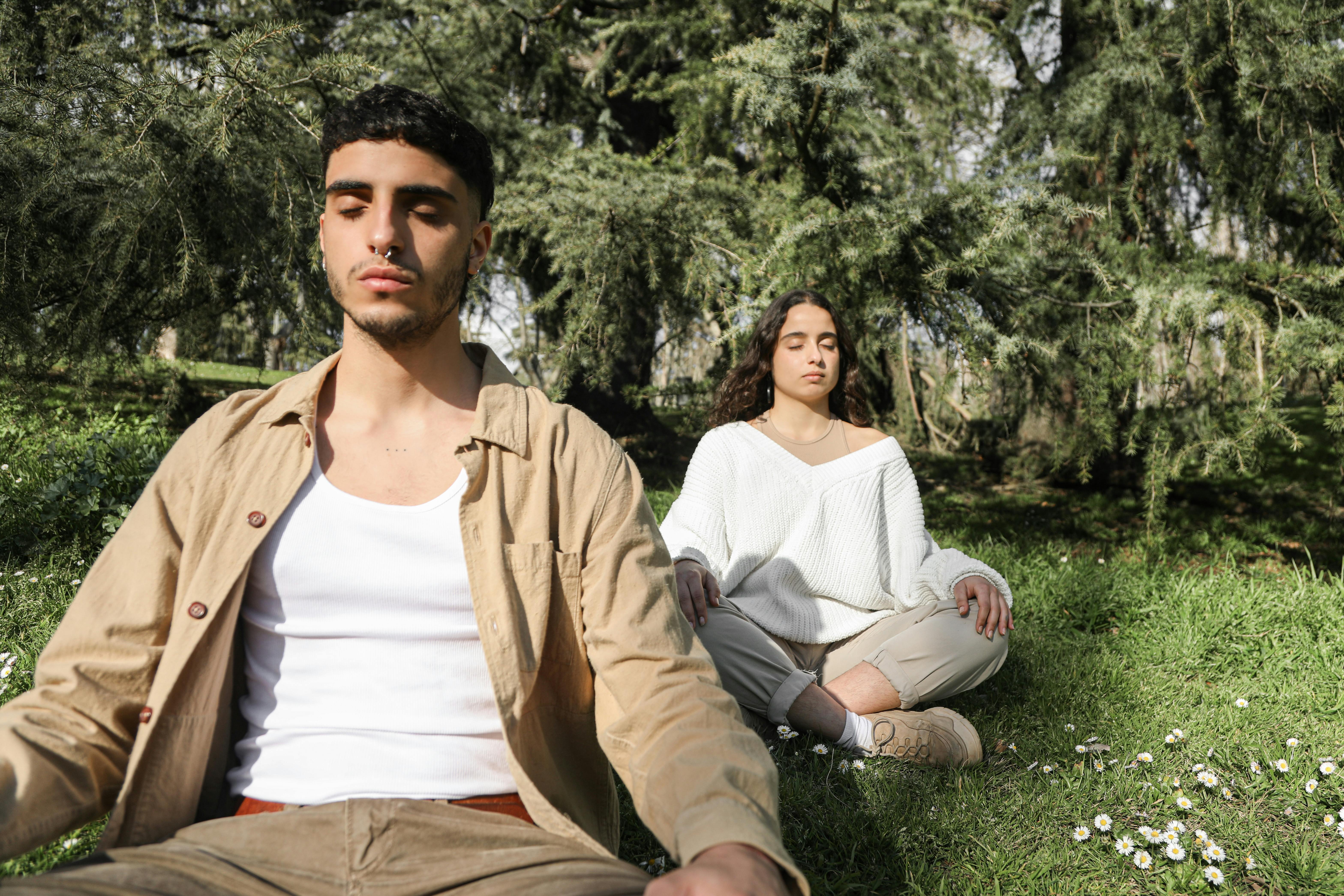
What Does Breathwork Feel Like? A Honest Description From Someone Who Does It Every Day
The Most Honest Description of What Breathwork Feels Like — Phase by Phase
By Destinē the Leader · Energy of Creation
Breathwork feels like nothing else you have tried before — and that is not marketing language, it is an honest description of what happens when you deliberately shift your body chemistry through breath. The sensations that arise during a guided breathwork session are real, measurable, and often unexpected. Understanding them before your first experience is the difference between resisting what arises and allowing it to move through.
The short description: breathwork feels like a wave that builds through the body, peaks somewhere between release and expansion, and lands in a stillness that most people have never felt before. The longer description is what this post is for.
Why Breathwork Feels Different From Anything Else
Most wellness practices work at the level of behavior or belief. You change what you eat, how you move, what you think. Conscious breathwork works directly on your physiology — the actual chemistry of your blood and the electrical signals of your nervous system.
When you breathe in a structured pattern, the ratio of oxygen to carbon dioxide in your bloodstream shifts. Blood pH changes temporarily. Blood flow is redistributed toward the brain and vital organs. Your nervous system receives a fundamentally different signal and begins to reorganize itself around it. The feelings that arise during breathwork are not imagined or induced by suggestion. They are the subjective experience of a real physiological event happening in real time.
This is why people who arrive skeptical — particularly high performers who are data-driven and not easily impressed by wellness claims — are often the most surprised by their first session. It does not ask you to believe anything. It asks you to breathe. The biology does the rest.
At Energy of Creation's Social Club sessions, this experience is deepened by something no open speaker system can replicate: each participant wears a premium wireless headset with noise cancellation and individual sound control. The breathwork journey is set to a precisely designed music arc heard with complete sonic immersion — private, personal, and fully controlled. The music becomes a co-facilitator. Your session becomes genuinely yours. Because headsets are limited per gathering, spots must be secured in advance.
→ View the next Social Club session and book your spot
Before the Breathing Begins — The Container
The session opens with a grounding. You are lying on your mat — or in a comfortable reclined position — headset on. The music is quiet. The facilitator explains briefly what is about to happen and why. Not a disclaimer, not a legal read-through. Real information about your body and what it is about to experience.
This phase matters more than it looks like it does. The nervous system responds to cues of safety. When you know what is coming, you can relax into it rather than brace against it. The facilitator is not just setting context — they are signaling to your nervous system that what follows is intentional, supported, and safe.
You take a few natural breaths. A simple intention is offered — hold it if it resonates, release it if it does not. The music shifts. The journey begins.
The Opening — First Five to Ten Minutes
The rhythmic breathing begins. Through your headset, the music is immediate and clear — a tempo that guides the rhythm of your breath without requiring you to count. The pattern is typically an active inhale, a brief natural suspension at the top, and a relaxed exhale. You breathe with the music. Nothing to figure out.
In the first few minutes it feels familiar. Just breathing, but consciously. Your mind may wander. You may think about your day, your to-do list, the thing you said in that meeting. This is normal and does not mean you are doing it wrong. Each time you notice your attention has moved, you return to the breath and the music.
Around the five-minute mark, things begin to shift.
Tingling. The most reliably reported first sensation — an effervescent, buzzing quality in the hands that spreads through the fingers and up the forearms. Some people feel it in the lips, around the mouth, through the face and scalp. It can feel electric, warm, or like a deep vibration beneath the skin.
This is caused by the shift in CO2 and blood pH described above — a completely normal physiological response that signals the practice is working. It is not harmful. It fades completely after the session.
Warmth. A spreading warmth through the chest — a quality of aliveness or expansion distinct from ordinary body heat. Some describe it as the chest opening. Others describe it simply as feeling warm from the inside.
The quieting of thought. The mental chatter begins to slow on its own. Not because you forced it but because the chemistry that sustains anxious mental activity has changed. Thoughts become less frequent and less sticky. The gap between them widens.
For high performers who have tried meditation and struggled with an overactive mind, this is often the most surprising thing that happens: the stillness arrives through the body without requiring the mind to achieve anything. That realization — that regulation is a physiological state not a mental discipline — changes the relationship to the practice entirely.
The Peak — The Middle of the Practice
The music builds through your headset. The breathwork deepens. This is the phase where experience varies most between individuals — and where the range of what is possible is widest.
For some people it feels like expansion. A genuine sense that the ordinary boundaries of the body have become more permeable. Colors behind closed eyelids become vivid. A quality of spaciousness arrives that feels larger than the physical space they are lying in.
For some people it feels like coming home. A profound settling — as though something that has been held at arm's length for a long time has finally been allowed to arrive. People who experience this often cannot find adequate words for it afterward. The closest most get is: "I felt like myself for the first time in a long time." This is what the isolation of a high-demand life costs — access to your own interior. The peak of breathwork returns it.
For some people it feels like release. Emotions surface that were not on the agenda. Grief. Joy. Relief. Anger that has had nowhere to go. The nervous system is accessing stored material and beginning to discharge it. This is not a sign that something is going wrong. This is the confusion clearing — the fragmented, blocked, suppressed experience finding its way through.
For some people it feels like all three in rapid succession.
For some people the first session is subtle. Relatively little that reads as dramatic — and this is equally valid. The physiological changes are happening regardless of the subjective experience. Breathwork is not a performance. There is no correct response. Come back for a second session before drawing conclusions about whether it is for you.
If at any point the experience feels too intense — slow your breathing or return to natural breath. You are always in control. The facilitator monitors the room throughout and is trained to support participants who experience strong responses.
The Breath Holds — A Moment Outside of Time
At intervals during the session the facilitator guides you into a breath hold — typically after a full exhale. Hold gently until the body signals readiness to breathe again. Do not force.
Through the headset, the music shifts subtly during the holds — creating a private sonic container for the pause. Most people experience a profound shift in awareness: time distorts, thought becomes very quiet, imagery or emotion may arrive. Some describe these moments as the most significant of the entire session — the place where the deepest clarity or release occurs.
The hold is never forced. Most practitioners are surprised by how long they can hold comfortably once the preceding breathing has prepared the system — and equally surprised by how little effort it requires.
The Landing — Integration Phase
The music softens. The facilitator guides you back to natural breathing. The active phase is complete.
This transition is one of the most beautiful features of the practice. The contrast between the activated state during the breathing and the profound quiet that follows is striking in a way that is difficult to anticipate.
The body feels simultaneously heavy and light. Thoughts are slow and unhurried. The ordinary background hum of demands and unresolved things — the dysregulation that has become so familiar most people stopped noticing it — is temporarily, genuinely absent. Not suppressed. Absent.
People describe this landing phase as feeling:
Deeply rested — as though they slept for hours without the grogginess of having actually slept.
Wrung out in the best possible way — like something has been thoroughly processed and there is space on the other side of it.
Profoundly present — more aware of the room, the people, the physical world than they typically are during an ordinary Saturday afternoon.
Emotionally clear — not empty, but clear. The way air feels after rain. The confusion that arrived with them has not necessarily been solved, but the system carrying it has been lightened.
Grateful — without a specific object for the gratitude. Simply grateful to be in a body that is capable of this.
The integration phase typically lasts ten to fifteen minutes. The most important instruction for first-timers is this: do not rush out of it. Lie still. Let it complete. The processing that happens in this phase is the practice continuing. It is not wind-down time. It is the practice in its quietest and most important form.
After the Session — The Hours and Days That Follow
Immediately after. Most people leave feeling calm, present, and clear. Some feel emotional in a quiet, open way. Some feel energized. Some want to be alone with the experience for a while. All of it is appropriate.
That evening. Sleep is typically more restorative on the night after a breathwork session. Dreams can be vivid and meaningful. The nervous system continues integrating during sleep what the breathwork initiated.
The following days. Many practitioners report shifts that arrive after the session rather than during it. A decision that had felt impossible becomes clear. A creative block that had been stuck for weeks dissolves. A relationship that had felt strained becomes more navigable. A business problem that seemed overwhelming resolves into its component parts and suddenly has a path.
This is not coincidence. The nervous system, having discharged some of its accumulated load, has more capacity available for the actual demands of your life. What looked like confusion was often the system operating at reduced capacity. Regulation restores what dysregulation was suppressing.
What changes with regular practice. The effects compound. The baseline shifts. The ease of returning to regulation grows. What used to feel like a massive physiological undertaking begins to feel like coming home — because your nervous system has learned the way back and can find it more readily each time.
Comparison to Other Things You May Have Tried
Compared to yoga. Yoga opens the body through movement and breath. Conscious breathwork opens the nervous system directly through breath alone — lying still, going deep. The two practices are highly complementary. Many people find that regular breathwork makes their yoga practice significantly more grounded.
Compared to meditation. Meditation asks you to observe experience from stillness. Breathwork asks your body to actively create a physiological shift that stillness then follows. The destination is similar. The route is fundamentally different. Many high performers who cannot access stillness through meditation find it arrives naturally at the end of breathwork.
Compared to therapy. Therapy works primarily through language and cognition — making meaning of experience through conversation and insight. Breathwork works through the body — accessing and discharging stored experience without necessarily requiring narrative. They address different layers of the same territory and are frequently practiced together.
Compared to nothing. The most common thing people say after their first session is some version of: "I had no idea my body could feel that way." The reference point changes permanently. What felt like normal begins to feel like a baseline worth leaving behind.
Experience This for Yourself
The most complete answer to what breathwork feels like is always the same: come and find out.
Energy of Creation's Social Club brings guided conscious breathwork to Central Texas — professionally facilitated, set to a live music arc, and experienced through a premium immersive headset so the journey is genuinely yours. The social hour after the session gives the connection and community time that the practice opens you to receive.
Headsets are limited. Spots must be booked in advance.
→ View the next Social Club session and secure your spot
For online guided breathwork — Super Sunday is available every first Sunday of the month. Live, facilitated, community-held.
Frequently Asked Questions
What does breathwork feel like for beginners? Most beginners experience tingling in the hands and face, a gradual quieting of mental chatter, warmth in the chest, and a quality of profound calm during the integration phase at the end. Some experience emotional release. All sensations are temporary, physiologically normal, and resolve completely as the breathing slows.
Is breathwork supposed to feel intense? It can — particularly during the peak phase when emotional material surfaces or strong physical sensations arise. Intensity is not a sign that something is wrong. It is a sign that the body is processing something real. You can always slow your breathing or return to a natural rhythm if anything feels too strong.
Do people cry during breathwork? Yes — and it is common and welcome. Breathwork accesses stored emotional experience in the nervous system. Tears during or after a session are a sign of discharge and release, not distress. Many people describe the crying as the first genuine emotional release they have had in longer than they can remember.
What does the tingling during breathwork mean? Tingling — typically felt in the hands, face, and lips — is caused by a temporary shift in CO2 levels and blood pH as you breathe in a structured pattern. It is a normal physiological response, completely harmless, and fades as the breathing slows. It is one of the most reliable signals that the practice is working.
How long does a breathwork session feel like it lasts? Time perception changes noticeably during breathwork — particularly during breath holds, which many people describe as feeling completely outside of ordinary time. A forty-five minute session often feels simultaneously longer and shorter than it was. This distortion is a recognized feature of the altered states that breathwork produces and is completely harmless.
How do I book a breathwork session with Energy of Creation? Visit energyofcreation.com/social-club to view the next Social Club session in Central Texas and secure your spot — headsets are limited and must be reserved in advance. For online breathwork, Super Sunday is available every first Sunday at energyofcreation.com/super-sunday.
Destinē the Leader is a SOMA Breath Certified Transformational Coach, 500-hour yoga teacher, Ayurvedic practitioner, sound therapist, and ecstatic dance DJ. She is the founder and Minister of Love at Energy of Creation — a 508(c)(1)(a) nonprofit wellness community whose mission is Breaking Cycles, Building Futures.


