Can Breathwork Help With Anxiety and Stress? What the Science Actually Says
You Are High-Functioning and Running on Survival Mode. Breathwork Changes That.
By Destinē the Leader · Energy of Creation
Yes — breathwork can help with anxiety and stress. And not in the way a hot bath or a walk around the block helps. In a measurable, physiological, this-is-actually-happening-in-your-cells way. When you breathe in a structured pattern, you directly alter the chemistry of your blood, activate the vagus nerve, and shift your nervous system out of the stress response it has been locked in — often for months or years.
For high performers, this distinction matters enormously. You are not anxious because you are weak. You are not stressed because you lack discipline. You are running a nervous system that has been in survival mode so long it has forgotten what regulation feels like. Breathwork gives it back — not as a concept but as a felt, measurable, repeatable physiological reality.
This post covers what anxiety and stress actually are at the physiological level, why breathwork addresses them at the root while most approaches only manage the symptoms, what the research shows, and what you can expect from your first session.
What Anxiety and Stress Are Really Doing to Your Performance
High performers are experts at functioning under stress. What most do not realize is how much that functioning is costing them — not in obvious breakdown but in the slow erosion of the capacities they depend on most.
The Hidden Tax on Your Highest Capacities
Chronic stress is not just uncomfortable. It is physiologically suppressive. Sustained cortisol elevation — the chemical signature of the stress state — directly impairs the prefrontal cortex: the part of your brain responsible for creative thinking, nuanced decision-making, emotional regulation, and strategic clarity. The very capacities that define you as a high performer are the first casualties of a dysregulated nervous system.
The connection that should feel easy becomes effortful. The creative work that used to flow gets stuck. The business decisions that should be clear feel murky. The health habits that matter keep falling off. This is not a character problem. This is dysregulation doing what dysregulation does — systematically reducing access to your full capacity while you work harder to compensate.
The Stress Physiology Loop
When the brain detects a stressor — a difficult conversation, a financial pressure, an uncertain outcome, the perpetual stimulation of a packed schedule — the sympathetic nervous system activates. Adrenaline and cortisol are released. Heart rate increases. Breathing becomes shallow and rapid. Blood flow redirects away from digestion and immune function. The prefrontal cortex is partially overridden by the limbic system's threat detection.
This response is adaptive in a genuine emergency. It is corrosive as a chronic operating state.
The problem most high performers are navigating is not that the stress response activates — it is that it never fully deactivates. Modern professional life does not offer the physiological resolution the stress response was designed for. One meeting ends and another begins. The stressors stack without discharge. Cortisol remains elevated. HRV remains low. The system that was built to protect you begins quietly dismantling the capacities that matter most for the life you are trying to build.
Anxiety as a Separate Layer
Anxiety adds another dimension. Where stress is typically a response to an identifiable external demand, anxiety is characterized by a nervous system generating threat signals in the absence of any specific threat. Free-floating dread. A low hum of unease that follows you even into moments that should feel good. The inability to fully land in rest, in connection, in creative flow — because the system is reading everything as potentially dangerous.
The breathing pattern associated with anxiety is particularly important. Anxious breathing tends to be shallow, rapid, and chest-centered — precisely the pattern that maintains and amplifies the stress response. The breathing and the anxiety create each other in a self-reinforcing loop. Conscious breathwork interrupts that loop at the source.
Why Breathwork Reaches the Root That Other Approaches Miss
Most approaches to anxiety and stress work downstream — managing symptoms or changing thoughts without changing the underlying physiological condition. Breathwork works upstream, at the level of the nervous system itself.
The Vagus Nerve — Your Direct Line to Regulation
The vagus nerve is the longest cranial nerve in the body and the primary pathway of the parasympathetic nervous system — the branch responsible for rest, recovery, digestion, and the dampening of the stress response. When it activates, cortisol decreases, heart rate slows, digestion resumes, and the prefrontal cortex regains full access to its capacity — including the creative thinking, emotional regulation, and strategic clarity that chronic activation has been suppressing.
Slow, rhythmic, diaphragmatic breathing is the most direct and reliable non-pharmacological activator of the vagus nerve available. The connection is anatomical and immediate. When you breathe slowly and fully, you send a direct signal to the parasympathetic nervous system that the threat has passed and recovery can begin.
This is why three slow breaths before a difficult conversation change how you show up. Not because you convinced yourself to be calm. Because your biology shifted.
HRV — The Metric That Tells the Real Story
Heart rate variability is the variation in time between consecutive heartbeats. High HRV indicates a flexible, resilient nervous system that can shift efficiently between activation and recovery. Low HRV indicates a system locked in chronic stress load — unable to access genuine rest even when the opportunity exists.
The practical consequence for high performers: low HRV means you are not recovering between demands. Every meeting, every decision, every relationship is drawing from a progressively more depleted account.
A 2023 study in Cell Reports Medicine — one of the most rigorous breathwork trials published — found that breathwork outperformed mindfulness meditation on measures of anxiety, stress, and mood improvement, with faster onset and larger effect sizes. Breathwork consistently produces measurable HRV improvements during and after sessions — effects that compound with regular practice into lasting changes in the resting baseline.
CO2 Tolerance and the Anxiety Spiral
Here is a mechanism most people have never heard of — and one that changes how high performers understand their own reactivity.
People with anxiety tend to have lower CO2 tolerance than average. Their nervous systems interpret normal or slightly elevated CO2 as a signal of danger, triggering the stress response prematurely. This creates a loop: anxiety produces a breathing pattern that reduces CO2, the reduced CO2 triggers more nervous system activation, which produces more anxiety, which produces more anxious breathing.
Structured breathwork — specifically practices that include breath holds — gradually increases CO2 tolerance. Each breath hold creates a controlled, safe experience of rising CO2 that the nervous system learns to tolerate without activating the panic response. Over weeks of regular practice, this recalibrates the threshold at which the stress response fires. Reactivity decreases. What used to feel overwhelming begins to feel manageable.
What Changes When Your Nervous System Regulates
This is the part that matters most for the life you are actually trying to build.
Connection becomes available again. When the nervous system shifts out of survival mode, the social engagement system comes back online. The quality of presence that makes genuine relationship possible — with your partner, your team, your clients, yourself — returns. Isolation was never entirely about not having people around you. It was often about being in a physiological state that could not fully access them.
Creative capacity opens. The prefrontal cortex regains access to its full function. Ideas flow again. Problems that felt intractable become solvable. The creative clarity that used to come naturally — before the stress accumulated — becomes accessible without requiring a vacation or a crisis to force the reset.
Your health stops being the thing you mean to get to. Sleep deepens. The afternoon energy crash that a second coffee used to hold off disappears. HRV improves. Resting heart rate decreases. The body that has been running on stress chemistry begins to function the way it was built to.
Business decisions get clearer. Strategic clarity, the ability to hold complexity, the capacity to lead from groundedness rather than reactive urgency — these are nervous system functions. They are available when the system is regulated and compromised when it is not. High performers who regulate consistently report that the quality of their thinking, not just its comfort, improves in ways that show up directly in their work.
What to Expect in a Guided Breathwork Session
For the high performer considering their first session — understanding what to expect reduces the activation that unfamiliarity creates.
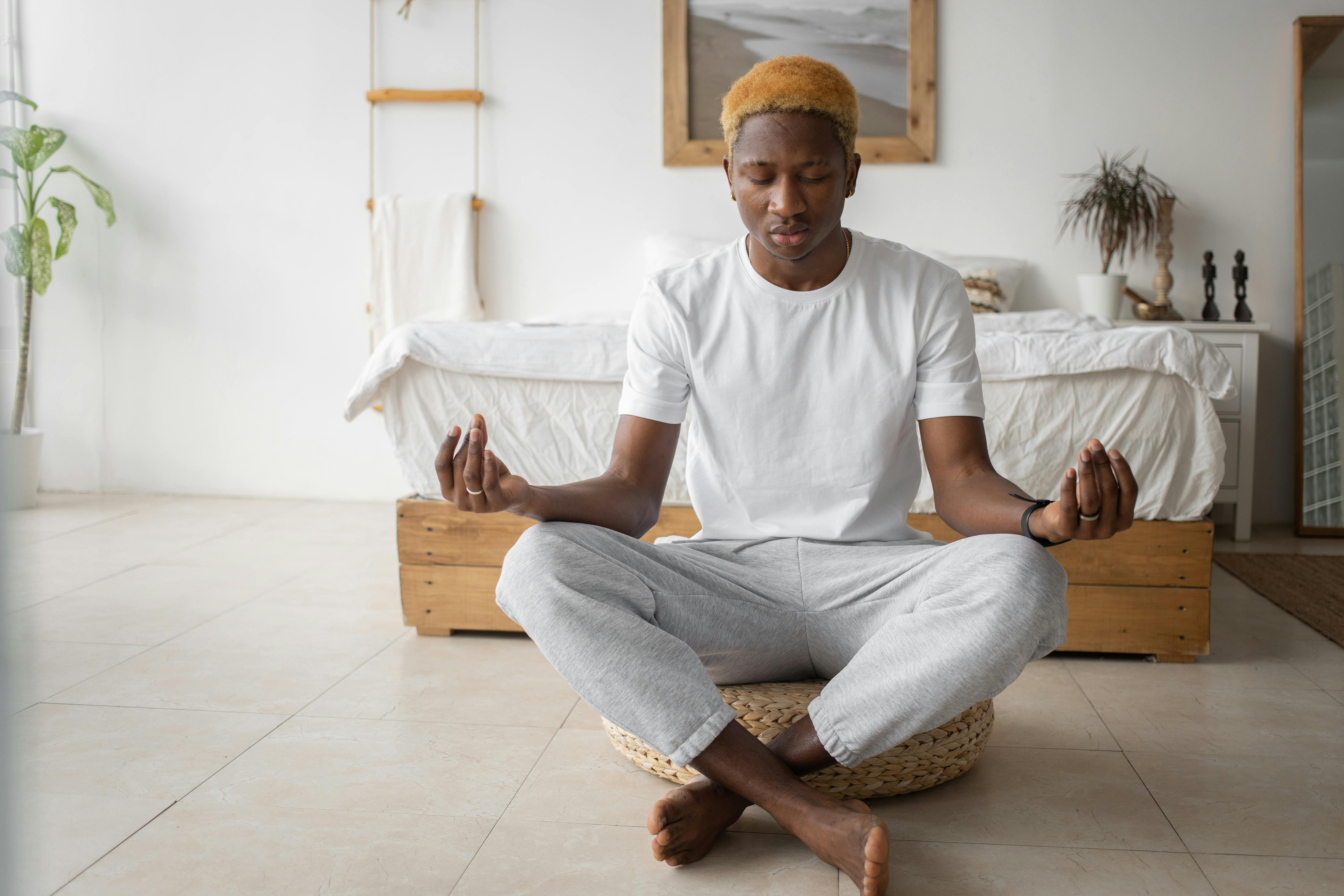
The first ten minutes feel like conscious breathing — deliberate, slightly more intentional than ordinary breath. Your mind may keep working through whatever it was working through before. This is normal.
Around ten to fifteen minutes in, something shifts. The mental chatter slows — not because you forced it to but because the chemistry that sustains it has changed. Tingling in the hands and face is common and normal — a physiological response to the CO2 shift, harmless and temporary.
During the breath holds, time perception changes. Emotional material may surface — relief, grief, release of something that has been held without a name. This is the somatic clearing that breathwork produces. Many high performers describe this as the moment something unlocks.
The integration phase at the end delivers a quality of stillness that is unlike anything most people have experienced through other means. Clear. Present. The absence of the low hum of activation that has become so familiar it felt like a personality trait.
In the days after, the effects often deepen in unexpected ways. A decision that felt impossible becomes clear. A conversation that had been avoided becomes possible. Creative work that was stuck moves. The nervous system, having discharged some of its accumulated load, has more capacity available for the actual life you are living.
Experience This in Community
Breathwork in community produces effects that solo practice cannot fully replicate. When multiple nervous systems practice together in a held space, the co-regulation between them amplifies what is possible individually.
At Energy of Creation's Social Club sessions in Central Texas, each participant experiences the journey through a premium wireless headset with individual sound control and noise cancellation — a fully immersive sonic environment that takes the practice to a depth an open speaker system cannot reach. The breathwork is professionally facilitated. The music arc is precisely designed. The social hour after gives the connection time that the practice opens you to receive.
Headsets are limited per session. Spots must be booked in advance.
→ View the next Social Club session and secure your spot
Super Sunday brings live facilitated conscious breathwork online every first Sunday of the month — for consistent access between in-person sessions.
Frequently Asked Questions
Can breathwork actually help with anxiety? Yes — through documented physiological mechanisms. Breathwork directly activates the vagus nerve, reduces cortisol, improves heart rate variability, and gradually increases CO2 tolerance — recalibrating the threshold at which the stress response fires. These are measurable changes to the nervous system's baseline, not temporary distraction from anxious thought.
How fast does breathwork relieve stress? Most people experience a measurable shift in nervous system state within the first ten to fifteen minutes of guided practice. Significant cortisol reductions are documented within a single session. The full felt experience of regulation — the clarity and stillness of the integration phase — typically arrives within twenty to thirty minutes.
Is breathwork better than meditation for anxiety? A 2023 randomized controlled trial in Cell Reports Medicine found that all three breathwork conditions studied outperformed mindfulness meditation for stress and mood improvement, with faster onset and larger effect sizes. Breathwork is often more immediately accessible for high performers whose stress level makes sitting quietly with an untrained mind counterproductive.
What does breathwork feel like for someone managing anxiety? Most people experience a gradual quieting of mental activity, tingling in the hands and face, emotional material surfacing and releasing, and during the integration phase a quality of stillness that is distinct from ordinary relaxation. Many describe it as the first time they have felt genuinely calm without a specific reason to be.
Does breathwork help with the anxiety that comes from high-demand work? Yes — particularly the free-floating anxiety and reactive stress patterns that high performers carry between demands. Breathwork increases CO2 tolerance, improves HRV, and clears the somatic residue of accumulated stress that maintains anxious physiology even when the workday is technically over.
Where can I experience guided breathwork in Central Texas? Energy of Creation's Social Club offers guided conscious breathwork sessions in Central Texas — each participant in a premium immersive headset experience. Super Sunday brings live facilitated breathwork online every first Sunday. Visit energyofcreation.com/social-club to view the next session and book your spot.
Destinē the Leader is a SOMA Breath Certified Transformational Coach, 500-hour yoga teacher, Ayurvedic practitioner, sound therapist, and ecstatic dance DJ. She is the founder and Minister of Love at Energy of Creation — a 508(c)(1)(a) nonprofit wellness community whose mission is Breaking Cycles, Building Futures.