
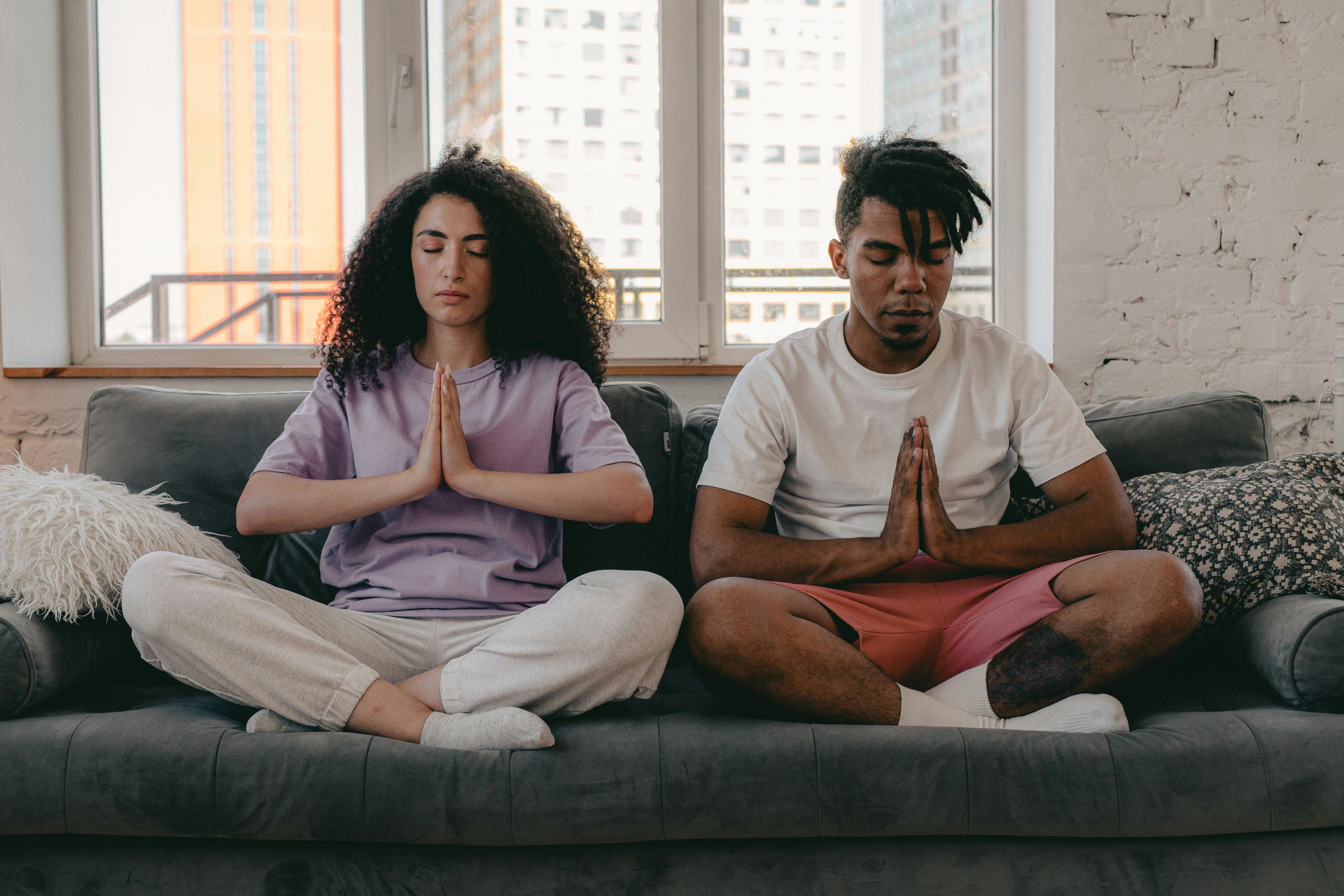
Breathwork vs Meditation — What's the Difference and Which One Is Right for You?
You Have Tried Meditation. It Did Not Stick. Here Is Why Breathwork Might Be the Thing That Actually Does.
By Destinē the Leader · Energy of Creation · April 2026
Breathwork and meditation are often mentioned in the same breath — both are wellness practices, both involve some version of slowing down, both promise calm and clarity. But they work through completely different mechanisms, they produce different results, and they feel nothing alike in practice.
If you have tried meditation and found it frustrating, inaccessible, or simply one more thing you could not sustain — that experience is not evidence that you are bad at wellness. It is information about which mechanism your nervous system actually needs right now. And for most high performers operating under chronic stress, the answer is not the practice that asks you to be still first. It is the one that changes your physiology first and lets the stillness arrive on its own.
This post covers how both practices actually work, why breathwork is often the more accessible entry point for high performers, and why understanding the difference changes how you approach both.
What Meditation Actually Is
Meditation is a broad category — mindfulness, Vipassana, Transcendental Meditation, loving-kindness, body scanning, guided visualization, mantra-based practice. What they share is a common orientation: you sit or lie still, you observe your experience without trying to change it, and you practice returning your attention to a chosen anchor — usually the breath, a mantra, or a physical sensation — whenever the mind wanders.
The mechanism is primarily top-down — cognitive and attentional. You are training the mind's ability to notice when it has been pulled away and to return without judgment. Over time this builds what neuroscientists call attentional control — the capacity to choose where your focus goes rather than being swept along by whatever is loudest in the environment or in your own head.
The physiological changes that accompany sustained meditation — reduced cortisol, lower heart rate, changes in brainwave activity — are largely a downstream effect of the mind settling. The mind shifts. The body follows.
The research on meditation is genuinely compelling. The benefits for anxiety, depression, and chronic stress are documented across decades of study. The operative words, however, are consistent and long-term. Most researchers note that meaningful benefits require regular practice over weeks and months — and the early stages, before the attentional muscle has developed, are genuinely uncomfortable. You are sitting with an untrained, busy mind, and the instruction to "just return to the breath" can feel meaningless when the returning is happening every few seconds.
For a high performer whose nervous system has been running in sympathetic overdrive for months or years — the mind the meditation is trying to train is the same mind that the chronic stress has been activating relentlessly. You are asking an exhausted sprinter to practice slow, precise footwork. The intention is right. The sequence may not be.
What Conscious Breathwork Actually Is
Conscious breathwork approaches the same destination — calm, clarity, regulation — from the opposite direction. Instead of working top-down (mind influencing body), breathwork works bottom-up. You change your physiology directly through the breath, and the shift in mental and emotional state follows.
When you breathe in a structured pattern, you alter the balance of oxygen and carbon dioxide in your blood. CO2 levels shift. Blood pH changes temporarily. The nervous system receives a different signal and begins to move out of its stress-adapted state. Muscles release tension. The analytical mind quiets — not because you told it to, but because the chemical conditions that sustain anxious mental activity have changed.
The mechanism is physiological first, psychological second. This is why conscious breathwork can produce significant shifts in a single session in a way that most meditation practices cannot — particularly for someone who is new to both. You are not training an ability over time. You are directly changing the conditions of your body in the present moment.
At Energy of Creation's Social Club sessions, this physiological intervention is amplified by the immersive headset experience — each participant uses a premium wireless headset with noise cancellation and individual sound control, so the precisely designed music arc that guides the breathwork journey is heard with complete sonic immersion. The music is not background. It is a co-facilitator that carries you through the emotional and physiological arc of the practice. That level of immersion is simply not achievable through an open speaker system — and it produces a qualitatively different depth of experience.
The Key Differences — Laid Out Plainly
The primary mechanism. Meditation works top-down — the mind settles and the body follows. Conscious breathwork works bottom-up — the body shifts and the mind follows. This single distinction explains almost every difference between the two practices.
What you are doing. In meditation you sit still and observe your experience without trying to change it. In conscious breathwork you actively breathe in a guided pattern that changes your physiology as you go.
The learning curve. Meditation requires the gradual development of attentional capacity — which means the early practice is often the hardest. Conscious breathwork works through biology regardless of attentional skill — beginners and experienced practitioners feel real effects in the same session.
Timeline for results. Meaningful benefits from meditation typically develop over weeks and months of consistent practice. Conscious breathwork produces measurable physiological shifts within a single session — most people feel something real the first time.
Physical sensations. Meditation aims for stillness — physical sensation is largely incidental. Breathwork is physically active — tingling, warmth, pressure, and emotional release are expected and normal features of the practice, not distractions from it.
Emotional release. Standard meditation practices can access emotional material but this is relatively uncommon. Breathwork regularly produces emotional surfacing and release — the nervous system discharging what it has been holding — because it accesses stored experience through the body rather than through cognitive observation.
Who each serves best. Meditation tends to be more immediately accessible for people who can tolerate sitting with a busy mind without becoming frustrated by it. Conscious breathwork tends to be more immediately accessible for people whose chronic stress makes stillness feel counterproductive — which describes most high performers in the early stages of a wellness practice.
What each produces. Meditation builds attentional capacity over time — the long-game skill of returning to presence across the full range of daily experience. Conscious breathwork produces physiological regulation now — within the session — and builds a nervous system baseline that sustains over time with regular practice.
Why High Performers Who Struggle With Meditation Often Thrive With Breathwork
This is the section that matters most for the majority of people reading this.
The most common complaint about meditation — especially from high performers, people managing chronic stress, and those who describe themselves as having a busy brain — is the inability to quiet the mind. They sit, they try to focus, and within seconds they are planning tomorrow, replaying yesterday, generating to-do items. The instruction to "just return to the breath" feels inadequate when the returning is happening dozens of times per minute.
This is not a failure at meditation. It is an accurate read of what meditation feels like before the attentional muscle has developed — and it is precisely the experience of a nervous system that has been running in sympathetic activation for long enough that sitting still with it feels actively uncomfortable.
Breathwork bypasses this problem entirely.
When you breathe in a structured pattern, the rhythm of the breath becomes the anchor and the music becomes the container. Your mind does not need to do anything to produce the physiological shift — the shift happens through the body. The tingling in the hands is not a metaphor. The tears that arise are not a choice. The stillness at the end is not a mental achievement — it is the natural state the nervous system settles into when the stress chemistry has cleared.
For many high performers, the first breathwork session is the first time in years — sometimes the first time ever — that their nervous system has genuinely rested. That experience creates a reference point that changes everything. They now know what regulation feels like from the inside. That knowledge makes every subsequent practice — including meditation — more accessible.
The confusion many high performers carry about "not being able to meditate" often dissolves after a few months of regular breathwork. The nervous system has been prepared. The attentional practice becomes possible on the physiological foundation that breathwork builds.
How They Work Together
Rather than competing practices, breathwork and meditation address different parts of the same goal from different angles.
Breathwork clears the physiological backlog — the stored stress, tension, and emotional residue that accumulates in the body over time. It works fast and at a level the mind cannot directly access. It is particularly effective for:
People who feel stuck, overwhelmed, or emotionally blocked
High performers whose creative capacity has been suppressed by chronic stress
Those whose isolation has created a disconnection from their own inner life
Anyone who has been running on confusion — too much information, no clear path — and needs the system to clear before clarity can arrive
Meditation builds the long-term capacity for attentional control and equanimity — the mental stability that allows you to remain grounded under pressure, to see patterns without being controlled by them, to access genuine presence across the full range of daily experience.
In the classical yoga framework from which conscious breathwork draws its roots, pranayama — breath control — is the fourth of eight limbs, positioned specifically as the bridge between the physical practices and the inner practices of meditation and deep awareness. The ancient teachers understood that the body and nervous system must be prepared before the mind can settle. The sequencing was deliberate.
When you practice breathwork regularly, meditation becomes easier. The nervous system is less burdened. The busy brain settles more readily. The gap between thoughts — the stillness you are reaching for in meditation — becomes more accessible because the physiological conditions for it have been created.
Which One to Start With
If you have tried meditation and found it inaccessible: start with breathwork. Give your nervous system the physiological shift it has been waiting for. Experience what genuine regulation feels like in your body. Let the stillness arrive through biology rather than effort. Then return to meditation from that foundation and notice the difference.
If you have an existing meditation practice and want to deepen it: add breathwork. It will accelerate your access to the states you are reaching for and clear the physical residue that can make extended sitting difficult.
If you are completely new to both: breathwork is the more forgiving entry point. You do not need to be good at being still. You do not need to manage your mind. You need to show up, put on your headset, and breathe when guided. The rest follows from the biology.
Experience the Difference in Person
Energy of Creation's Social Club brings guided conscious breathwork to Central Texas in a facilitated, music-driven, community-held experience — each participant immersed in their own premium headset journey. This is the entry point for the high performer who has heard about breathwork, knows they need something, and is ready to feel the difference rather than read about it.
Headsets are limited per session. Book your spot before they are gone.
→ View the next Social Club session and secure your spot
Super Sunday brings live facilitated conscious breathwork online every first Sunday of the month — for practitioners who want consistent access between in-person sessions or are not yet in the Central Texas area.
Frequently Asked Questions
What is the difference between breathwork and meditation? Meditation works top-down — the mind observes and settles, and the body follows over time. Conscious breathwork works bottom-up — the breath directly shifts the body's physiology, and mental and emotional calm follows immediately. Both produce regulation and clarity through fundamentally different mechanisms and timelines.
Is breathwork better than meditation? Neither is universally better — they address different dimensions of the same goal. Breathwork produces faster physiological results and is more immediately accessible for beginners, particularly those whose stress level makes sitting quietly with an untrained mind counterproductive. Meditation builds long-term attentional capacity. Practiced together they are deeply complementary.
Can I do breathwork if I have never meditated? Yes. Conscious breathwork requires no prior meditation experience. The facilitator guides every phase. The music guides the rhythm. Your mind does not need to do anything to produce the physiological shift — the shift happens through the body regardless of what your thoughts are doing.
Why do I find it hard to meditate but might find breathwork easier? Meditation requires training attentional capacity — which is genuinely difficult when the nervous system is dysregulated. Breathwork bypasses the need for attentional training by changing the body's physiology directly through the breath. The stillness arrives as a physiological consequence rather than as a mental achievement. Many high performers who have struggled with meditation find breathwork immediately effective for exactly this reason.
Will breathwork help me get better at meditation? Often yes. Regular breathwork reduces the physiological dysregulation that makes meditation difficult — improving HRV, lowering cortisol, and clearing the somatic residue of accumulated stress. Practitioners who add breathwork to an existing meditation practice frequently report that the quality and depth of their meditation improves significantly.
How do I try conscious breathwork with Energy of Creation? Visit energyofcreation.com/social-club to view the next Social Club session in Central Texas and book your spot — headsets are limited and must be reserved in advance. For online breathwork, Super Sunday is available every first Sunday at energyofcreation.com/super-sunday.
Destinē the Leader is a SOMA Breath Certified Transformational Coach, 500-hour yoga teacher, Ayurvedic practitioner, sound therapist, and ecstatic dance DJ. She is the founder and Minister of Love at Energy of Creation — a 508(c)(1)(a) nonprofit wellness community whose mission is Breaking Cycles, Building Futures.


